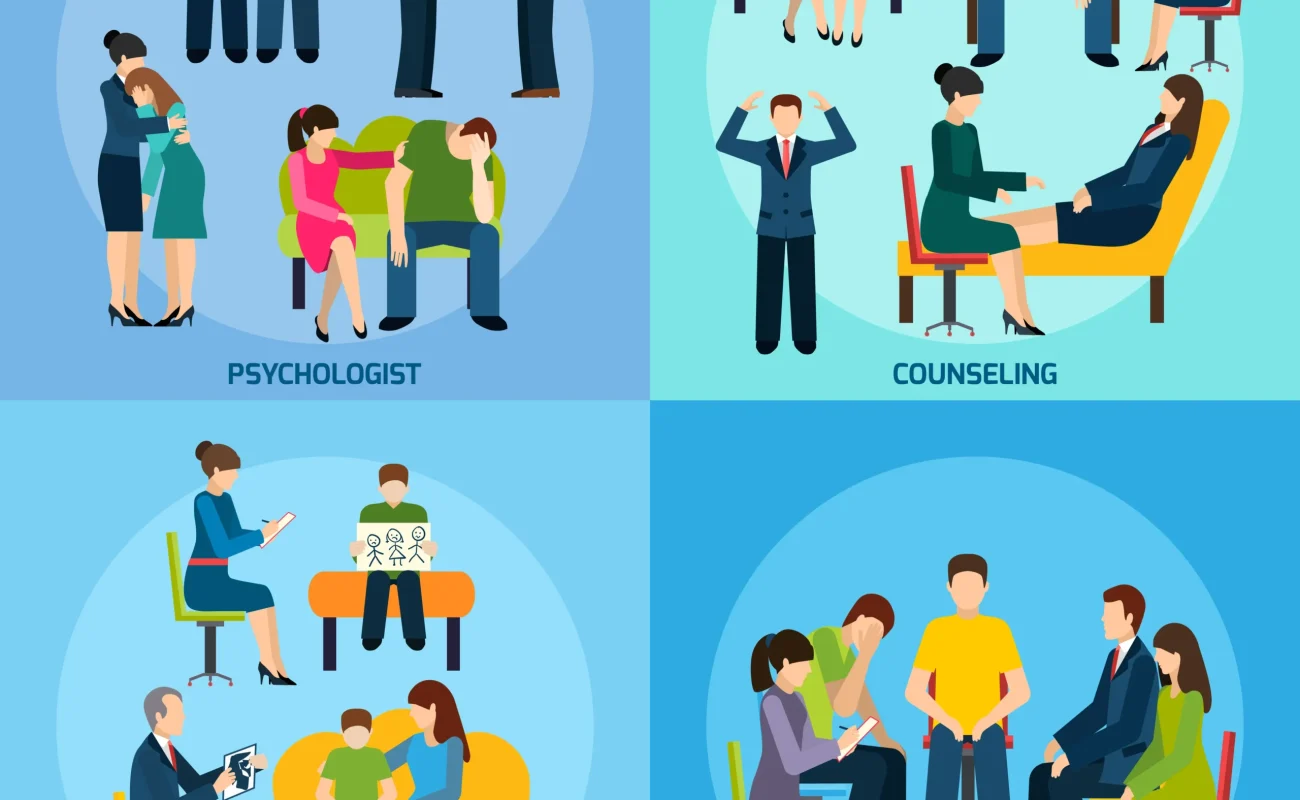
Therapy is a collaborative process where you work with a trained mental health professional to address emotional, psychological, or behavioral challenges. It’s not just talking—it’s actively developing skills, processing experiences, and creating meaningful change in your life.
EMDR Therapy: Trauma and PTSD—processes traumatic memories through bilateral stimulation
Dialectical Behavior Therapy (DBT): Emotional regulation—teaches mindfulness and distress tolerance
Family Therapy: Communication and family conflicts—addresses family dynamics
Play Therapy: Children’s issues—helps kids express feelings through play
Group Therapy: Peer support for anxiety, addiction, and grief
Signs You Need Therapy
For Adults:
Persistent sadness lasting more than two weeks
Difficulty completing daily tasks
Panic attacks or overwhelming anxiety
Using substances to cope with emotions
Feeling hopeless or suicidal thoughts
Significant changes in sleep or appetite
For Children:
Sudden behavior changes or regression
Persistent nightmares or sleep problems
Extreme tantrums beyond developmental norms
Withdrawal from friends and activities
Declining school performance
Excessive worry or fear
What to Expect in Therapy?
Initial Session (60-90 minutes):
Discussion of what brought you to therapy
Background information and history review
Current symptoms and challenges assessment
Goal setting for treatment
Establishing rapport and comfort
Ongoing Sessions (45-60 minutes):
Check-in about the past week
Discussion of specific issues
Skills practice and strategy development
Processing emotions and experiences
Homework assignments and progress monitoring
Common Therapy Myths
Myth 1: “Therapy is only for people with serious mental illness.” Reality: Therapy helps anyone struggling with life’s challenges, from everyday stress to clinical disorders.
Myth 2: “Therapy takes years and years.” Reality: Many people see significant improvement in 3-6 months, depending on individual goals and needs.
Myth 3: “I should be able to handle this on my own.” Reality: Seeking help demonstrates strength and self-awareness, not weakness.
Our Comprehensive Therapy Services
At EroThots, we provide resources for individual therapy, family counseling, couples therapy, group programs, trauma-focused treatment (EMDR), anxiety and depression management, grief counseling, behavioral therapy for children, teen care, and crisis intervention guidance.
How Dr. Evelyn Quinn (Mental Health Specialist) Can Assist You
Dr. Evelyn Quinn, a licensed clinical psychologist with over 13 years of experience, offers comprehensive mental health support. Under her guidance, you will receive:
Expert Clinical Care: Personalized treatment plans based on evidence-based therapeutic approaches
Proven Methods: CBT, EMDR, ACT, and DBT certified interventions
Ongoing Support: Continuous monitoring and treatment adjustments for optimal mental health outcomes