

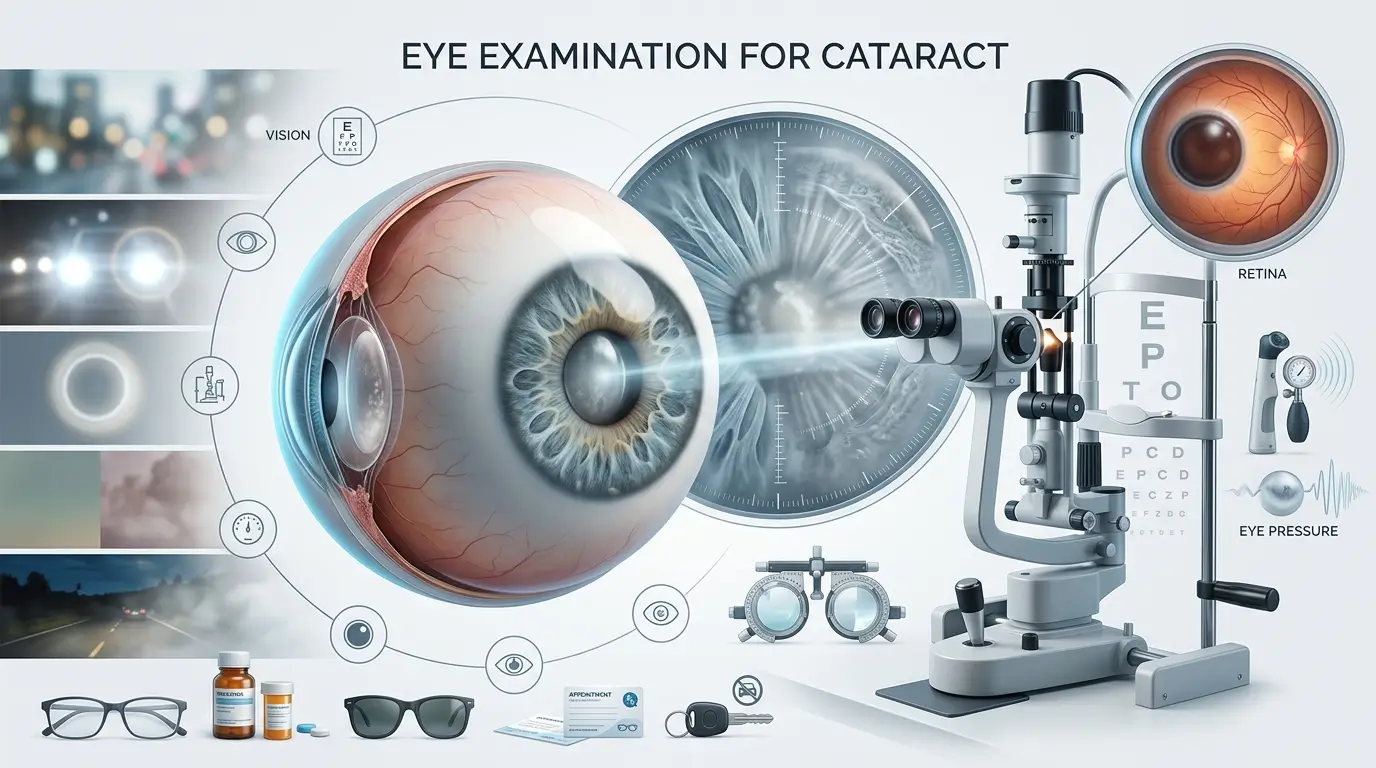
If your vision has become blurry, dull, or increasingly glare-sensitive, your eye doctor will likely recommend a comprehensive eye examination for cataract. This isn’t a single test — it’s a structured series of checks designed to confirm whether the eye’s natural lens has clouded, how advanced it is, and whether it’s the actual cause of your vision changes.
This guide walks through every part of the exam, what each test measures, how to prepare, and what your results might mean.
Medical disclaimer: This article is for general educational purposes and does not replace professional medical advice. Only a licensed ophthalmologist or optometrist can diagnose cataracts. If you’re experiencing vision changes, schedule an eye exam promptly.
What Is a Cataract?
A cataract is a clouding of the eye’s natural lens — the clear structure behind the iris that focuses light onto the retina. As the lens becomes cloudy, light scatters instead of focusing properly, leading to blurred, hazy, or dimmed vision. Cataracts usually develop slowly with age, though they can also result from injury, certain medications, diabetes, or prolonged UV exposure.
Common Symptoms That Prompt an Exam
- Blurry or cloudy vision
- Increased sensitivity to glare, especially from headlights at night
- Halos appearing around lights
- Fading or yellowing of colors
- Frequent changes in glasses or contact lens prescription
- Double vision in one eye
- Difficulty reading or driving at night
The Complete Diagnostic Workflow
A cataract exam typically follows a set sequence, moving from general vision screening to detailed internal imaging.
1. Patient History and Symptom Review
Before any testing begins, the doctor will ask about:
- How long you’ve noticed vision changes
- Whether glare or low light makes vision worse
- Past eye surgeries or injuries
- History of radiation therapy near the head or neck
- Current medications, especially steroids
- Family history of eye disease
2. Visual Acuity Test
This is the standard eye chart test (often a Snellen chart) measuring how clearly you see at a fixed distance, usually 20 feet. Each eye is tested separately while the other is covered. A drop in visual acuity — especially one that glasses can’t fully correct — is one of the first clues pointing toward cataracts.
3. Refraction Test
The doctor checks how light bends as it enters your eye to determine your exact prescription. Frequent, unexplained prescription changes can be an early sign of a developing cataract.
4. Slit-Lamp Examination
This is the centerpiece of a cataract diagnosis. A slit lamp is a specialized microscope combined with a focused, high-intensity light that lets the doctor view the front structures of the eye — cornea, iris, and lens — in fine detail and at high magnification. This is how the doctor can directly see clouding within the lens, note its location, and assess its density.
5. Tonometry (Eye Pressure Test)
Tonometry measures the pressure inside your eye. This step isn’t about cataracts directly — it rules out glaucoma, another common age-related eye condition that can cause similar vision complaints and sometimes coexists with cataracts.
6. Dilated Eye Exam
Eye drops are used to widen (dilate) the pupil, giving the doctor a much clearer, wider view of the lens and retina. This step helps confirm the cataract’s exact location and rules out other retinal problems that could also be affecting vision.
7. Glare and Contrast Sensitivity Testing (When Needed)
Some clinics use additional tests to measure how much glare affects your vision or how well you distinguish objects from their background — both are often noticeably reduced by cataracts even when standard visual acuity still looks fairly good.
Diagnostic Tests Compared
| Test | Purpose | What It Detects | Typical Duration |
|---|---|---|---|
| Visual Acuity (Snellen) Test | Measures sharpness of vision | Overall vision decline | 5 minutes |
| Refraction Test | Determines glasses/contact prescription | Prescription shifts linked to cataracts | 5–10 minutes |
| Slit-Lamp Examination | High-magnification view of front eye structures | Location and density of lens clouding | 5–10 minutes |
| Tonometry | Measures intraocular pressure | Rules out glaucoma | 1–2 minutes |
| Dilated Eye Exam | Wide view of lens and retina | Confirms cataract, checks retina | 20–30 minutes (including dilation time) |
| Glare/Contrast Sensitivity Test | Measures functional vision in real-world conditions | Impact of cataract on daily activities | 5–10 minutes |
How to Prepare for a Cataract Eye Exam
- Bring your current glasses or contacts, plus your prescription history if you have it
- List all medications and supplements you’re currently taking
- Arrange a ride home — dilation drops blur vision and increase light sensitivity for several hours
- Wear sunglasses to the appointment for comfort after dilation
- Avoid scheduling important tasks (like driving or detailed work) immediately afterward
What Happens After Diagnosis
A cataract diagnosis doesn’t automatically mean you need surgery right away. In early stages, doctors often recommend:
- Updating your glasses or contact lens prescription
- Using brighter lighting at home for reading and close work
- Wearing anti-glare sunglasses outdoors
- Scheduling regular follow-up exams to monitor progression
Surgery is typically recommended once the cataract begins to noticeably interfere with daily activities such as driving, reading, or recognizing faces.
Frequently Asked Questions
Is an eye examination for cataract painful?
No. The exam is painless and non-invasive. Dilation drops may cause temporary stinging and light sensitivity, but no part of the standard exam involves pain.
How long does a full cataract eye exam take?
A comprehensive exam, including pupil dilation, usually takes 30 to 60 minutes total, factoring in the 15–20 minutes needed for dilation drops to take effect.
Can a regular eye doctor diagnose cataracts, or do I need a specialist?
Both optometrists and ophthalmologists can diagnose cataracts during a comprehensive eye exam. An ophthalmologist is typically involved if surgery becomes necessary.
Will I need someone to drive me home after the exam?
Yes, it’s strongly recommended. Dilating drops blur vision and increase glare sensitivity for several hours, making driving unsafe immediately afterward.
How often should I get checked for cataracts?
Adults over 60 are generally advised to have a comprehensive eye exam every one to two years, or sooner if vision symptoms develop. Your doctor may recommend a different schedule based on risk factors like diabetes or family history.
The Bottom Line
An eye examination for cataract combines several simple, painless tests — visual acuity, slit-lamp examination, tonometry, and a dilated retinal exam — to give your doctor a complete picture of your lens health. Catching cataracts early through routine exams makes it far easier to manage symptoms with non-surgical steps before more significant vision loss sets in. If you’ve noticed blurry vision, glare sensitivity, or halos around lights, scheduling a comprehensive eye exam is the right first step.
Sources referenced: Mayo Clinic, Cleveland Clinic, National Institute for Health and Care Excellence (NICE), Health in Aging (American Geriatrics Society Health in Aging Foundation).
