
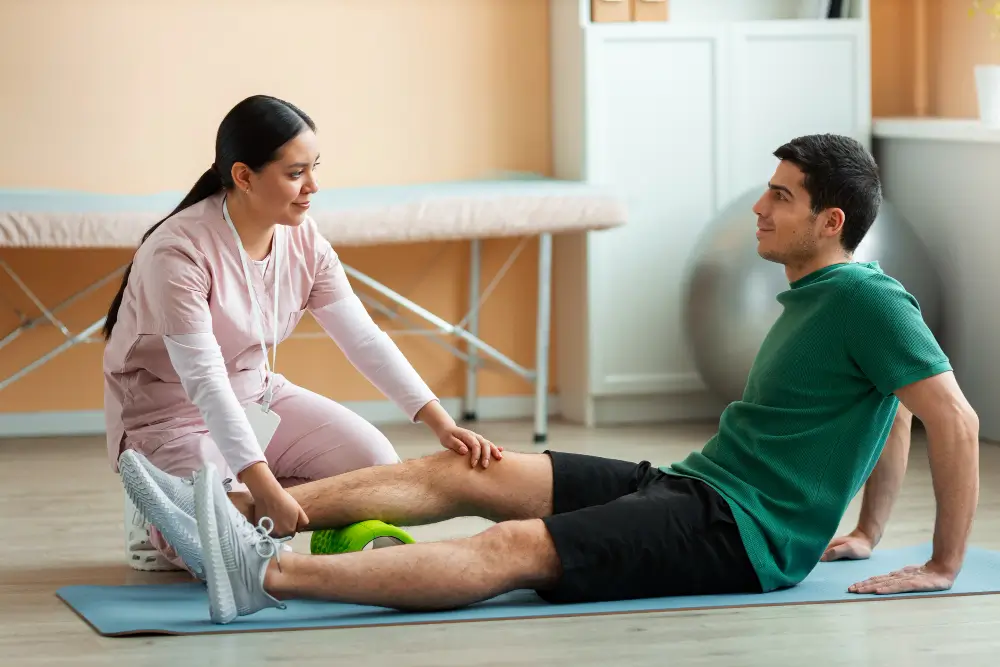
When you tear your ACL, everything changes. You hear a pop, feel unstable, and realise that you have to work hard for months to get better. Every year, thousands of athletes and energetic people successfully finish their ACL rehabilitation and get back to doing all they used to do. The first step to making that journey as easy as possible is to know exactly what it will be like.
This complete guide goes over every step of ACL recovery, from the day following surgery to the day you play your first competitive game again. You will find realistic timelines, expert advice, comparison charts, and the useful information you need to speak out for yourself during your rehabilitation.
What is ACL rehabilitation time, and why does it matter?
The time it takes to rehabilitate an ACL injury or surgery is the time it takes to get back to full physical activity safely and confidently. It isn’t a set number; it’s a biological process that depends on how the graft matures, how the neuromuscular system is re-educated, and how ready the person is mentally.
It’s really important to get this timeframe right. One of the main reasons ACLs re-rupture is because people come back too soon, which is a far worse outcome. On the other hand, coming back too late might cause unneeded deconditioning, muscular atrophy, and more fear about being hurt again.
It’s ideal to think about ACL rehabilitation time as a set of milestones based on certain criteria, not as a countdown clock. You go forward when you consistently meet the requirements for each step, no matter how many weeks have gone by.
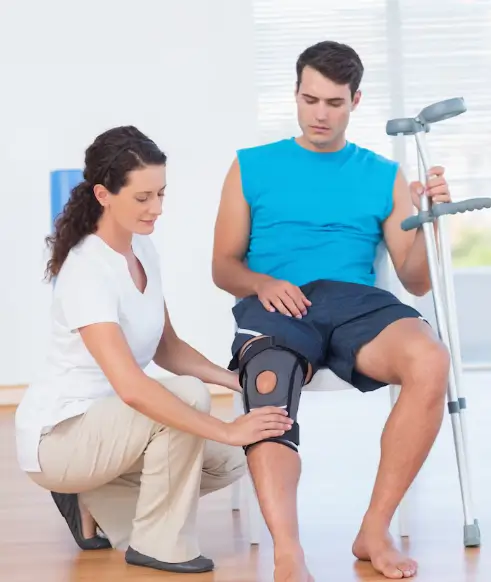
Factors that influence your ACL rehabilitation time
No two recoveries are the same. There are a lot of things that can make your ACL recovery time shorter or longer.
Graft type
The tissue that was used to fix your ACL is very important for how quickly it heals. Bone-patellar tendon-bone grafts are the best option for competitive athletes since they heal bones very well. Hamstring transplants have reduced donor-site morbidity, but they may take a little longer to integrate fully. Quadriceps tendon transplants are becoming more common and have great results.
Age and overall fitness
Younger, healthier individuals who were in good shape before their injury usually heal faster after ACL surgery. Biological age affects how fast you heal, and your baseline fitness affects how fast you can get your strength and neuromuscular control back.
Associated injuries
A lot of the time, ACL tears happen with meniscus damage, cartilage damage, or MCL tears. Every new injury can make your ACL recovery take weeks or even months longer. For instance, a combination ACL and meniscus repair can delay full weight-bearing for many weeks.
Compliance and quality of physiotherapy
You have complete control over this factor. Patients who continuously attend all physiotherapy appointments, carefully complete home exercise programmes, and refrain from banned activities routinely attain superior effects more rapidly.
| Factor | Effect on timeline | Modifiable? |
| Patellar tendon graft | Slightly faster bone healing | Partial (pre-op choice) |
| Hamstring graft | Standard timeline | Partial |
| Concomitant meniscus repair | +4–8 weeks | No |
| Age under 25 | Faster biological healing | No |
| Pre-injury strength level | Faster strength restoration | Yes (prehab) |
| Full physiotherapy compliance | Optimises every phase | Yes |
| Psychological readiness | Critical for final clearance | Yes (sport psychology) |
The six phases of ACL rehabilitation time
Most ACL rehabilitation programmes that are based on evidence break recovery down into steps. Each phase has its own goals and requirements that must be completed before proceeding. This is a full list of what you may expect.
Phase 1: Acute or pre-rehabilitation, from Week 0 to Week 2
Goals: minimise oedema, restore full range of motion, get the knee fully extended, lower pain, and start activating the quadriceps.
- To help with swelling after surgery, use ice, compression, and elevation.
- Most regimens call for immediate partial weight-bearing with crutches.
- Passive and active-assisted exercises for bending the knee
- Straight leg lifts to reconnect the quadriceps
Phase 2: Early strengthening, which lasts from weeks 2 to 6
Goals: get a full range of motion, move up to full weight-bearing, and start strengthening the lower limbs in a closed chain.
- Gradually getting used to carrying weight and using crutches
- Stationary cycling is a low-impact way to get your heart healthy.
- Small groups do squats, leg presses, and hamstring curls.
- Exercises for proprioception on stable surfaces
Phase 3: Neuromuscular control from weeks 6 to 12
Goals: Make the knee more stable as you move, do exercises with little impact, and get stronger.
- Training to balance on one leg and sense where your body is
- Walking in a pool and getting hydrotherapy (if you can)
- Moving on to walking on different types of ground
- Introducing low-level plyometrics, like bilateral box step-downs
Phase 4: Start running again—Months 3 to 6
Goals: get back to normal running mechanics, reach a limb symmetry index of 70–80%, and start conditioning for a specific sport.
- A structured programme for returning to running (including run-walk intervals)
- Isokinetic strength assessment to see how balanced you are
- Drills for agility ladders and changing directions slowly
- Checking psychological confidence
Phase 5: Advanced sport-specific training, from months 6 to 9
Goals: have 90% or more limb symmetry, be able to handle full training loads, and show that you are mentally ready.
- Full plyometric progressions, like depth jumps and lateral bounds
- Drills for cutting and pivoting at high speeds
- Ball skills and tactical drills for each sport
- Tests for functional movement and hops
Phase 6: Start competing again in Month 9 and beyond
Goals: to get back into competitive sports as soon as possible, with proof that all requirements have been satisfied.
- Passing all functional hop tests (at least 90% limb symmetry)
- A score of 65 or higher on the psychological preparedness scale (ACL-RSI)
- Confirmation of surgeon clearance and strength testing
- Slowly getting back into it: training, then non-contact, then full-contact competition
ACL rehabilitation time by sport: what the evidence shows
The time it takes to get back to sports depends on the demands of your activity. Contact and pivot-based sports take the longest to heal the ACL because they have a greater risk of re-injury.
| Sport / Activity | Minimum recommended time | Typical full return |
| Swimming | 3–4 months | 4–5 months |
| Cycling | 4–5 months | 5–6 months |
| Running (recreational) | 4–6 months | 6 months |
| Tennis / Racket sports | 7–9 months | 9–10 months |
| Football / Soccer | 9 months | 10–12 months |
| Rugby / American Football | 9–12 months | 12+ months |
| Basketball | 9 months | 10–12 months |
| Skiing | 9–12 months | 12–18 months |
The role of prehabilitation in shortening ACL rehabilitation time
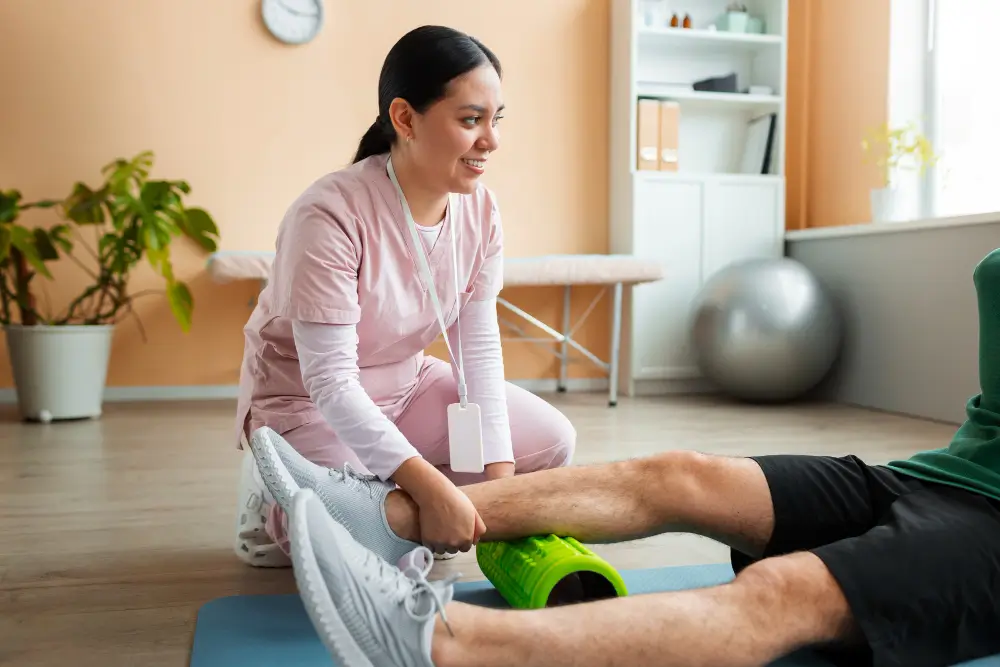
Prehabilitation, which means strengthening the knee before surgery, is one of the best-supported ways to shorten the time it takes to recover after ACL surgery.
The Journal of Bone and Joint Surgery released a groundbreaking study that showed patients who followed a structured pre-operative regimen had much better outcomes 12 months after surgery than those who went straight to the operating table.
Pre-operative quadriceps strength is the best way to tell how strong your quadriceps will be after surgery. “Every week of prehabilitation matters.”
— Dr. Clare Ardern, a researcher in sports physiotherapy at the Karolinska Institutet
A typical prehabilitation plan lasts only four to six weeks and includes quad exercises, straight leg raises, hamstring curls, hip strengthening, and proprioception work. This preparation before surgery can significantly shorten the early stages of ACL recovery after surgery.
Mental health and psychological readiness during ACL rehabilitation time
Studies show that one of the primary factors holding athletes back from fully recovering from their ACL injury is fear of further injuries, rather than physical requirements alone. Therefore, psychological assessments rather than sole physical assessments should govern return-to-sport decisions.
The ACL Return to Sport after Injury (ACL-RSI) Scale is a validated 12-item questionnaire that assesses emotions, confidence and risk evaluation before returning to competition. Most clinical guidelines now call for scoring of at least 65 out of 100 before competing again.
- From the fourth month on, work with a sports psychologist.
- Gradual exposure to game-like situations lessens the terror reaction.
- Visualization tactics boost confidence when you come back.
- Getting help from other people who are recovering from ACL surgery makes you feel less alone.
- Talk to your physiotherapist about your worries about getting hurt again.
Case study: elite football player vs recreational runner
To show how ACL rehabilitation time might be varied for different people, think of two completely different patients.
Case A: A 24-year-old semi-professional football player:
He had ACL repair with a hamstring graft in September. He was able to get through each phase without any problems since he had access to daily physiotherapy, gym facilities, hydrotherapy, and a sports psychologist. He passed all of the functional hop tests at nine months and went back to full training after ten months. He played his first competitive match eleven months after the surgery.
Case B: 38-year-old person who runs for fun:
She opted for conservative (non-surgical) care following her ACL tear, as her activity requirements were lower-pivot, and her orthopedic specialist concurred that she was an appropriate candidate. She started jogging 5K again after five months of an organized physiotherapy program and finished a half-marathon after eight months. Her total ACL rehabilitation time was lower since her return-to-sport requirements were less complicated.
Optimizing your ACL rehabilitation time
- Begin prehab right away; don’t just sit around and wait for your operation date. Start doing workouts to make your muscles stronger as soon as the soreness goes away.
- Don’t think about the calendar; think about the criteria. You should only make progress when you reach certain goals, not just because a certain number of weeks have gone by.
- Protect graft ligamentization: The ACL graft is weakest between the second and fourth months. During this time, don’t make any pivoting movements that put a lot of stress on your body.
- Don’t guess; test. Before you start the return-to-run phase, make sure you have limb symmetry index testing and hop tests.
- Talk about the psychology: Fear of being hurt again makes ACL rehabilitation take longer than virtually any other physical cause. Take care of it ahead of time.
- Talk to everyone on your team. The surgeon, physiotherapist, trainer, and sport psychologist should all agree on the same strategy for recuperation and return to sport.
- Plan for at least 12 months. For any contact or pivot sport, the safest time to recover from an ACL injury is at least nine to twelve months. Planning on a shorter schedule greatly raises the danger of re-rupture.
Frequently asked questions about ACL rehabilitation time.
1: How long does ACL rehabilitation take without surgery?
The average time it takes to recover from an ACL injury without surgery is four to eight months. It is good for people who aren’t very active, older patients, or people who have partial rips. Success depends a lot on the strength of the hamstrings and quadriceps, making up for the missing ACL. Most of the time, athletes who need to pivot, cut, or change direction quickly need surgery to fix their injuries.
2: Can I speed up my ACL rehabilitation time?
You can speed up your ACL recovery, but you can’t cut corners. The best way to get the best results is to finish prehabilitation, go to every session, eat well, sleep well, and follow your physiotherapist’s schedule exactly. Trying to speed through biological milestones greatly raises the danger of getting hurt again.
3: What is the most common reason for delayed ACL rehabilitation time?
The most common physical reason for a delayed comeback is weak quadriceps strength recovery. Kinesiophobia, or dread of re-injury, is the main reason people push themselves beyond their physical limits. Both can be dealt with with the right help from an expert.
4: Is a 6-month ACL rehabilitation time safe for returning to football?
No, six months is usually too soon for contact and pivot sports like football. Studies with a lot of people suggest that athletes who come back before nine months have a re-rupture rate that is more than four times higher than those who wait until nine months or beyond. The decision should be based on criteria-based readiness, not a six-month timetable.
5: Does age affect ACL rehabilitation time?
Age affects how quickly the body heals and how quickly strength is restored. Younger athletes usually get through the early stages of ACL therapy faster than older ones. Older athletes, on the other hand, frequently show stronger psychological preparation and commitment to protocols, which can make up for some of the biological disadvantages.
6: What happens if I return to sport before completing ACL rehabilitation time?
Returning too soon is linked to a much higher risk of re-rupture, ACL injury on the other side, cartilage loss, and long-term osteoarthritis. A 2016 study published in the British Journal of Sports Medicine discovered that for each month of postponement above six months (up to nine months), the rate of re-injury decreased by almost 51%.
7: What is ligamentisation and why does it affect ACL rehabilitation time?
Ligamentisation is the biological process that turns your graft tissue into a functional ligament over time. It starts a few weeks after the surgery and can take up to 18–24 months to finish. The graft is most fragile between months two and six. It is robust enough for everyday activities but not ready for high-stress sports movements. One of the main reasons why ACL rehabilitation time can’t be shortened is because of this biological process.
Conclusion
The time it takes to heal from an ACL injury is one of the most complicated in sports and medicine. It takes time, care, and equal attention to both physical and mental preparedness. There is no doubt that athletes who follow the full ACL recovery time, move through criteria-based phases, and deal with their fear of re-injury return to sport more successfully and have fewer re-injuries.
No matter when or where your surgery took place, trust the process, work with your team, and let the calendar dictate when you will return to play.
Sources and further reading
- Ardern CL, et al. (2014). “Fifty-five percent return to competitive sport following anterior cruciate ligament reconstruction surgery.” British Journal of Sports Medicine, 48(21):1543–52.
- Grindem H, et al. (2016). “Simple decision rules can reduce reinjury risk by 84% after ACL reconstruction: the Delaware-Oslo ACL cohort study.” British Journal of Sports Medicine, 50(13):804–8.
- Webster KE, Feller JA. (2019). “Return to sport outcomes in younger patients following anterior cruciate ligament reconstruction.” Knee Surgery, Sports Traumatology, Arthroscopy, 27(8):2516–22.
Books and extended resources
- Prentice WE. Rehabilitation Techniques for Sports Medicine and Athletic Training. 6th ed. McGraw-Hill Education, 2015.
- Ellenbecker TS, De Carlo M. ACL Rehabilitation: From Reconstruction to Return to Sport. Human Kinetics, 2020.
- Hewett TE, Paterno MV, Myer GD. “Strategies for Enhancing Proprioception and Neuromuscular Control of the Knee.” Clinical Orthopaedics and Related Research, 2002.

A retired physician with dual specialization in neurology and neurorehabilitation, Dr. Senelick spent 30 years as Medical Director of one of Texas’s leading rehabilitation hospitals — building clinical programs that have helped thousands of patients reclaim their lives after devastating neurological events.