

Weeks 1–2: Immobilize; Weeks 3–6: Early Rehab; Weeks 7–12: Strength & Balance; Weeks 13–24: Return to Activity; 6–12 months: Full Sport.
You just found out that you broke your ankle. You might be looking at a boot or a new cast and wondering when you’ll be able to walk again and if “back to normal” is even possible. The good news is that most people fully recover if they have the correct information and a plan. The most important thing is to know what each step of Ankle Fracture Rehabilitation Time looks like.
Ankle fractures are one of the most common injuries to the lower limbs. They can happen to people of all ages, from weekend athletes to older persons who just slip and fall. Even though it happens a lot, many don’t understand the recovery journey very well. A lot of patients think they will be able to walk properly again in a few weeks, but they are disappointed when their stiffness and weakness last for months.
This article tells you all you need to know, including how long it will take to heal from an ankle fracture, what to expect at each stage, what can slow down your recovery, and how to give yourself the best chance of getting back to normal activities.
What Is an Ankle Fracture? A Quick Overview
A broken ankle means that one or more of the three bones that make up the ankle joint—the tibia, fibula, and talus—have broken. The severity can vary a lot, from a hairline split in the fibula (lateral malleolus fracture) to complicated bi- or trimalleolar fractures that include more than one bone segment and injury to ligaments.
The kind and severity of your fracture will directly affect how long it takes to heal your ankle. A minor fibula fracture that doesn’t move may let you put some weight on it within days. But a serious trimalleolar fracture that needs surgery to correct may entail six weeks of strict non-weight-bearing before rehabilitation can even start.
- Lateral malleolus fracture: the most common type; generally the distal fibula; often easy to treat without surgery
- Medial malleolus fracture—affects the inner bony prominence of the tibia and may need surgery.
- Bimalleolar fracture: means that both the medial and lateral malleoli are damaged. Usually, surgery is needed to cure it.
- Trimalleolar fracture: all three malleoli are broken; this is the worst type of fracture and will take longer to heal.
- A pilon fracture is a high-energy injury that affects the distal tibia and is commonly linked to serious damage to soft tissue.
Ankle Fracture Rehabilitation Time: The Full Timeline at a Glance
The total time it takes to heal from an ankle fracture can be anywhere from 6 weeks for a small fracture to 12 months or more for more complicated surgical situations. Knowing this range keeps you from becoming upset and helps you set reasonable goals.
A featured snippet is a short definition of the term. The total time it takes for an ankle fracture to heal is the time it takes for the person to go from being injured or having surgery to being fully functional again. This can take anywhere from 6 weeks (for simple, undisplaced fractures) to 12 months or more (for complex operative cases). It includes the phases of bone healing, physiotherapy, and returning to activity.
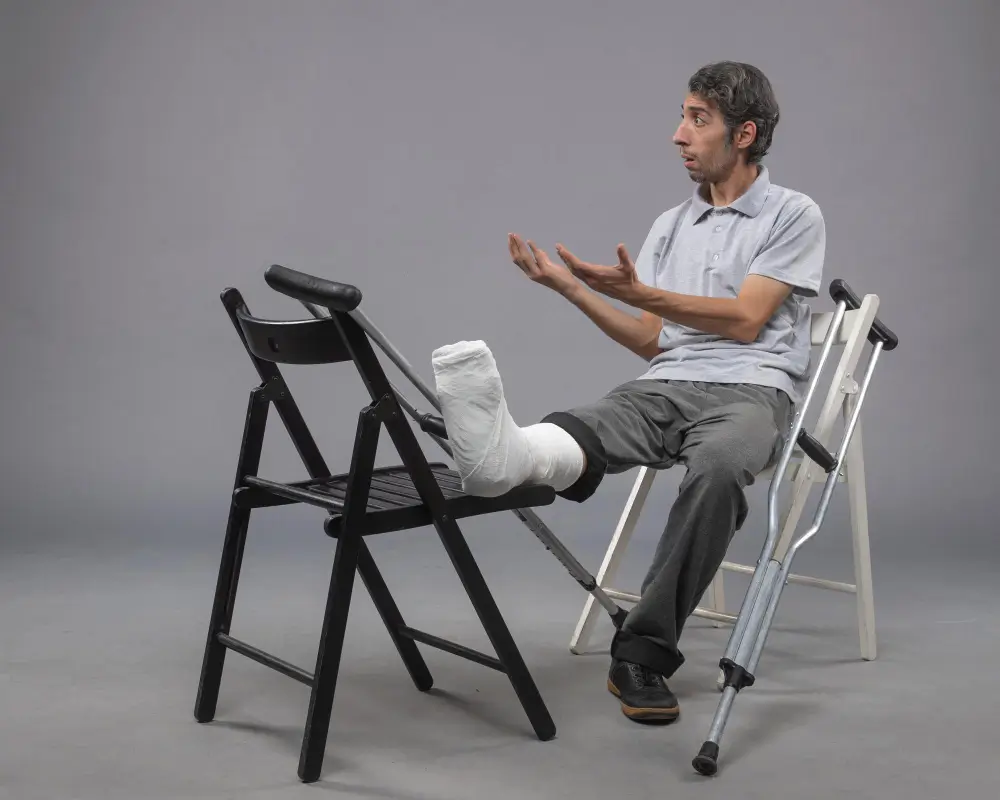
Phase-by-Phase Rehabilitation Timeline
Phase 1: Weeks 0 to 2
Phase of Acute / Immobilization
A cast, boot, or backslab keeps the damaged ankle from moving. Managing pain and edema is very important. If surgery is needed (open reduction internal fixation, or ORIF), it usually happens within 5 to 7 days following the accident. It is normal not to put weight on your foot or only touch your toes.
Phase 2: Weeks 3–6
Weight-Bearing Phase That Is Safe
Most patients switch to a detachable boot and start putting more weight on their feet. Physiotherapy begins softly with exercises that help you move your body. Managing edema (elevation, compression) is still important. Healing of the bone is actively happening; now is not the time to haste.
Phase 3: Weeks 7–12
The Active Rehabilitation Phase
The boot is usually taken off, and vigorous physiotherapy gets stronger. The exercises are all about getting back your ankle dorsiflexion, plantarflexion, strength, and proprioception. At this point in the recovery process after an ankle fracture, hydrotherapy and pool walking are often added.
Phase 4: Weeks 13–24
Phase of Functional Strengthening
You start doing progressive loading, single-leg balance practice, and drills that are relevant to your sport. For straightforward situations, the time it takes to heal an ankle fracture and go back to jogging is usually between 12 and 16 weeks after surgery. Residual stiffness or pain during activity is typical and anticipated.
Phase 5: Months 6–12+
Go back to doing everything.
Full return to competitive sports, strenuous manual labor, or high-impact activities. Some individuals, especially those over 60 or with other health problems, may still have symptoms for up to two years after the fracture. This is a usual amount of time for ankle fracture rehabilitation.
Factors That Affect Your Ankle Fracture Rehabilitation Time
No two ankle breaks are the same, and neither are their recoveries. Many biological and behavioral factors affect how long it may take you to recover from an ankle fracture.
1. Type and severity of the fracture
As we talked about, the most important factor in how long it takes to recover from a break is how complicated the structure is. A Weber A fibula fracture (below the ankle joint line) has a much shorter rehabilitation period than a Weber C fracture with syndesmotic disruption. The latter may need syndesmotic screw fixation and a more careful return to weight-bearing.
2. Surgical vs. Conservative Management
| Factor | Conservative (Cast / Boot) | Surgical (ORIF) |
| Initial immobilisation | 4–8 weeks cast / boot | 2–6 weeks post-op |
| Weight-bearing start | Earlier in stable fractures | Delayed 2–6 weeks typically |
| Physiotherapy start | Week 4–6 typically | Week 6–8 typically |
| Return to walking | 6–10 weeks | 8–12 weeks |
| Return to running | 12–16 weeks | 14–20 weeks |
| Full return to sport | 4–6 months | 6–12 months |
| Long-term outcomes | Good for stable fractures | Better anatomic alignment in unstable fractures |
3. Age and Bone Density
As we get older, our bones repair more slowly. A 25-year-old with a lateral malleolus fracture might be able to bear weight after three weeks, but a 70-year-old with the same fracture and osteoporosis might need to be protected for six to eight weeks. Older patients should also know that it usually takes longer to recover from an ankle fracture since their muscles heal more slowly and they are more likely to have problems like post-traumatic arthritis.
4. Associated Soft Tissue Injuries
A lot of the time, ankle fractures happen at the same time as ligament rips, cartilage injury, or syndesmotic injuries (when the ligaments that keep the tibia and fibula together are damaged). These fractures to soft tissue frequently take longer to heal than the bone itself, which can make the total time it takes to recover from an ankle fracture much longer.
- Tear in the lateral ligament complex—rehabilitation takes 4 to 8 weeks longer.
- Syndesmotic injury—may need further fixation; adds 6–12 weeks.
- Osteochondral defect (cartilage damage) can produce pain that lasts a long time and may need separate treatment.
- Swelling of soft tissue—severe edema might make it hard to do surgery on time and bear weight.
5. Compliance with Rehabilitation
Patients who regularly attend physiotherapy, complete prescribed home exercises, and comply with weight-bearing limitations consistently exhibit reduced functional recovery duration for ankle fractures. Not going to sessions or putting too much weight on the ankle too soon are the two most common reasons for delayed recovery.
“Patients who recover faster don’t necessarily have fractures that heal easily; rather, those who treat their rehabilitation plan like any structured training regimen tend to do much faster.”
— From the point of view of an orthopedic physiotherapist, British Journal of Sports Medicine, 2023
Step-by-Step Rehabilitation Process: What to Expect at Each Stage
Knowing what is expected of you each week might help you keep track of your progress and lower your stress. This is a clear, organized summary of the process of rehabilitating an ankle fracture.
- Control swelling and immobilization (weeks 0–2): Rest, raise, and put ice packs on the area (not directly on the skin) for 20 minutes many times a day. Use crutches correctly and don’t put weight on them unless your surgeon tells you to. To keep your blood flowing, move your toes around often.
- Start a modest range of motion (weeks 3–6): Under the instruction of a physical therapist, you should start doing alphabet exercises (tracing the alphabet with your toes), ankle circles, and gentle plantarflexion/dorsiflexion. These stop the joints from getting too stiff, which is one of the most common problems that makes ankle fracture recovery take longer.
- Weeks 4–8: Your physiotherapist will help you move from partial weight-bearing to full weight-bearing. This is usually done through a gait re-education program. During this period, pain levels of 3 out of 10 or lower are usually fine. If you feel sharp pain, you need to stop loading right away.
- Weeks 8 to 16: Strength training and proprioception training: The main workouts in this phase are calf raises, tension band exercises, single-leg balancing on surfaces that are more unstable with time (wobble boards), and step-up exercises. Proprioceptive deficiencies, which make it hard to balance and feel where your joints are, are a major cause of re-injury and need to be dealt with promptly.
- Weeks 16 to 24 and beyond: Jogging, lateral movements, jumping, and cutting drills are slowly brought back in. You can’t just go back to sports after a certain amount of time; you have to show that you have equal strength, balance, and confidence first.
- Long-term maintenance (months 6–12): Keep doing strength and balance exercises even after you can do everything again. Research indicates that proprioceptive deficiencies in the ankle may endure for as long as 12 months post-fracture, elevating the risk of re-injury if not proactively addressed.
Complications That Can Extend Ankle Fracture Rehabilitation Time
Even with the best care, problems can happen that make the recovery time for a broken ankle much longer. Knowing the warning signs lets you get help when you need it.
- Post-traumatic osteoarthritis affects up to 40% of people with complex fractures. It produces ankle pain and stiffness that gets worse with time.
- Malunion means that the bone heals in a way that is not straight, which may mean that surgery is needed to fix it.
- Non-union means that the pieces of the fracture don’t come together. This is more common in smokers, people with diabetes, and people with osteoporosis.
- Complex Regional Pain Syndrome (CRPS) is a type of neuropathic pain that can happen and make rehabilitation last much longer.
- Problems with the implant: hardware that sticks out and causes pain; screws that need to be taken out every 12 months;
- Deep vein thrombosis (DVT) is more likely to happen when you are immobile. After surgery, doctors commonly give you blood thinners.
When to get an urgent review: If you discover that your pain is getting worse instead of better after week 4, new swelling or redness that could mean DVT, numbness or color changes in the foot, or a fever that could mean a wound infection following surgery, call your orthopedic doctor right away.
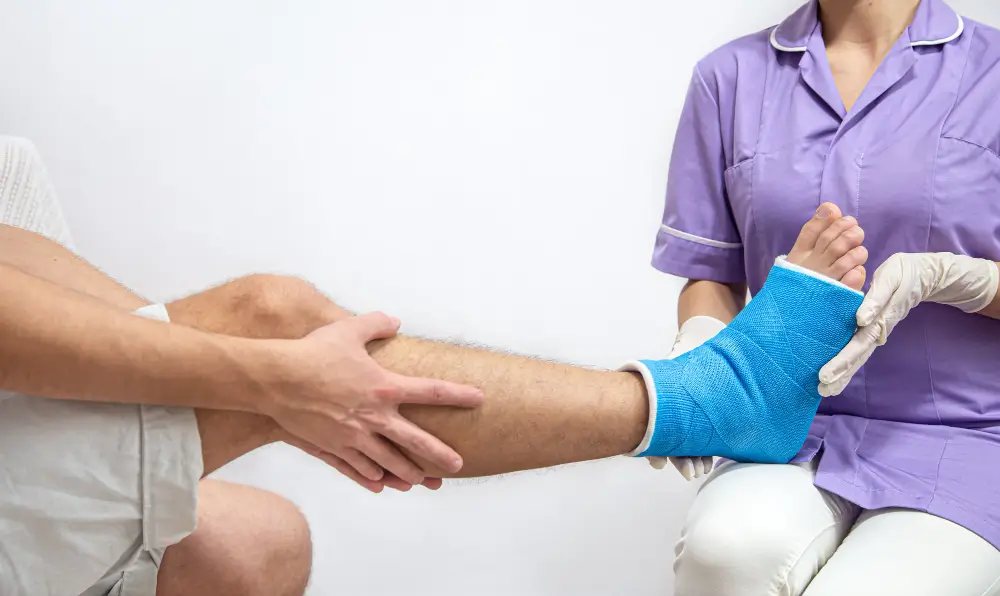
Nutrition and Lifestyle Factors That Speed Up Ankle Fracture Rehabilitation Time
The speed of bone regeneration isn’t just based on therapy. Several dietary and lifestyle factors can either accelerate or slow down the healing process of your ankle after a fracture.
Key Nutrients for Bone Healing
| Nutrient | Role in Healing | Key Food Sources |
| Calcium | Primary mineral for bone matrix | Dairy, leafy greens, fortified foods |
| Vitamin D | Enhances calcium absorption | Sunlight, oily fish, eggs, supplements |
| Vitamin C | Collagen synthesis; wound healing | Citrus fruits, peppers, broccoli |
| Protein | Supports bone callus formation and muscle rebuilding | Meat, fish, legumes, dairy |
| Zinc | Cofactor for bone mineralisation | Shellfish, seeds, nuts, red meat |
| Magnesium | Bone density support | Nuts, dark chocolate, whole grains |
Lifestyle Habits That Impact Recovery
- Smoking makes it much harder for bones to mend because it cuts off blood flow. It is very important to stop smoking while you are recovering from an ankle fracture.
- Alcohol: Drinking too much alcohol slows down the remodeling of bones and makes it more likely that you may fall. While you heal, cut back on what you eat.
- Sleep is when most of the growth hormone, which is important for tissue repair, is released. You should try to get 7–9 hours of sleep each night.
- Stress management: High levels of cortisol from long-term stress make it harder for bones to grow. Mindfulness and light exercise can assist.
- Cardiovascular fitness: Swimming and seated cycling are examples of upper-body and non-weight-bearing cardio that can help you stay fit and improve your circulation while you’re not moving.
Case Studies: Real-World Ankle Fracture Rehabilitation Time Examples
Case 1: Young Active Adult — Lateral Malleolus Fracture (No Surgery)
A 28-year-old amateur football player broke his Weber B lateral malleolus during a game. He started putting little weight on his foot at week 3, then full weight at week 6, and finally back to running without competition at week 12. In month 5, the player was able to fully return to football practice. The total time to heal from an ankle fracture is about five months.
Case 2: Middle-Aged Woman — Bimalleolar Fracture with ORIF
A 52-year-old teacher fell down a flight of stairs and broke both of her ankles. She needed surgery to correct the break with plates and screws. It took 6 weeks for the non-weight-bearing to work. She started physiotherapy in week 7, was able to walk on her own by week 14, and went back to low-impact aerobics in month 7. At 12 months, there was still some stiffness in the morning. It takes about nine months for a person with a broken ankle to be able to walk on their own again.
Case 3: Elderly Patient — Trimalleolar Fracture
A 71-year-old lady with type 2 diabetes broke three of her bones in a simple fall. Diabetes made it take longer for bones and soft tissues to mend. For eight weeks, you couldn’t put any weight on your feet. They needed a lot of physiotherapy and help with their diet. By month 5, the person could walk on their own, and they continued to get physical treatment until month 12. She was able to do what she used to do every day, but she didn’t go back to high-impact activities. It takes about 12 months to fully recover from a total ankle fracture and be able to do everything on your own.
Key Takeaways
- Timeline: The time it takes to heal an ankle fracture can be anywhere from 6 weeks to more than 12 months, depending on how bad the fracture is.
- There are five stages of recovery: immobilization, weight-bearing, active rehab, strengthening, and returning to exercise.
- Surgery: Surgery usually takes longer to heal an ankle fracture, but it works better for unstable fractures.
- Compliance: The most changeable factor for shortening the time it takes to heal an ankle fracture is regular physiotherapy.
- Nutrition: During rehabilitation, calcium, vitamin D, and protein are important nutrients that help bones mend.
- Expectations: It’s common to have some stiffness and pain for 6 to 12 months after a fracture, and this doesn’t mean that recovery has failed.
Frequently Asked Questions
1: How long does it take to walk after an ankle fracture?
People who break their ankles without surgery typically begin walking four to six weeks post-injury again with a boot. Most individuals can become independent walkers ten to fourteen weeks post-surgery, depending on how serious their fracture is and whether or not they follow recovery rules properly. The exact timeline may depend on both factors.
2: What is the total ankle fracture rehabilitation time for a bimalleolar fracture?
A bimalleolar fracture, which often necessitates surgical intervention, generally entails an ankle fracture rehabilitation period of 6–9 months for functional recovery and up to 12 months for complete resumption of sports or strenuous activities.
3: Can I speed up my ankle fracture rehabilitation time?
Yes, to some extent. Going to physiotherapy regularly, eating well (particularly calcium and vitamin D), not smoking, getting enough sleep, and not going beyond the weight-bearing restrictions advised by your doctor are all things that can help you recover faster without putting yourself at danger of relapse.
4: Is it normal for an ankle fracture to still hurt after 3 months?
Yes, it’s normal to still have pain and stiffness three months later, especially after surgery or a complicated fracture. It is normal to have a mild ache after standing or doing anything for a long time. If your pain is getting worse or is very bad, you should see your orthopedic surgeon to rule out problems like malunion or post-traumatic arthritis.
5: When can I drive after an ankle fracture?
Most surgeons say that you should wait 8 to 10 weeks following surgery, or 6 to 8 weeks conservatively, before you can safely and reliably do an emergency stop for right ankle fractures. If you break your left ankle in an automatic car, you might be able to go back to work sooner (4–6 weeks), but always check with your surgeon first.
6: Does ankle fracture rehabilitation time differ for elderly patients?
Yes, a lot. Patients over 65 years old usually take 20–30% longer to recover from an ankle fracture than younger adults because their bones are weaker, their healing time is slower, and they are more likely to have other health problems. Multidisciplinary treatment, which includes nutritionists and specialists in preventing falls, is very crucial for this group of people.
7: What exercises are best during ankle fracture rehabilitation?
The first stage is the ankle alphabet and circles (from weeks 3 to 4). In the middle phase, you will do calf raises, resistance band eversion/inversion, and wobble board balance work.
8: starting in week 8: In the late phase, you’ll do single-leg squats, step-ups, and running exercises (starting in week 14 and up). Always make progress with the help of a physiotherapist.
Conclusion
No set timeline exists for ankle fracture rehabilitation; rather, it varies according to factors like type and treatment plan of fracture, age and health of the individual, as well as commitment of treatment plan provider and commitment of patient in recovery process. At the same time, recovery might appear like an uphill climb at first glance, understanding each step along your journey to full function can make things less daunting and give hope of returning to everyday life sooner.
The most important thing to remember is that healing works on a biological clock that can’t be sped up, but it can be helped. Go to your physiotherapy sessions, eat foods that help heal bones, keep your fracture safe during the first several weeks, and trust the process. Most people with ankle fractures, even those who need surgery, get back to doing things that are important to them and having a good quality of life.
If you’re still in the early phases of healing, talk to your orthopedic team about an organized rehabilitation plan. If your ankle fracture recovery time seems to be taking longer than you thought it would, ask your doctor for a referral to a musculoskeletal physiotherapist who specializes in helping people with lower-limb fractures heal.
Sources and Further Reading
- Donken CCMA, Al-Hassan HK, Verhofstad MHJ, van Laarhoven CJHM. “Surgical versus conservative treatment for ankle fractures in adults.” Cochrane Database of Systematic Reviews. 2012.
- Lehtonen H, Järvinen TLN, Honkonen S, et al. “Use of a cast compared with a functional ankle brace after operative treatment of an ankle fracture.” Journal of Bone and Joint Surgery. 2003;85(2):205–211.
- Lin CWC, Donkers NAJ, Refshauge KM, Beckenkamp PR, Khera K, Moseley AM. “Rehabilitation for ankle fractures in adults.” Cochrane Database of Systematic Reviews. 2012.
- National Institute for Health and Care Excellence (NICE). Fractures — complex: assessment and management. NICE guideline [NG37]. 2016 (updated 2022).
- American Academy of Orthopaedic Surgeons (AAOS). “Ankle Fractures (Broken Ankle).
- Nilsson G, Jonsson K, Ekdahl C, Eneroth M. “Outcome and quality of life after surgically treated ankle fractures in patients 65 years or older.” BMC Musculoskeletal Disorders. 2007;8:16.
- British Orthopaedic Foot and Ankle Society (BOFAS). “Patient Information: Ankle Fractures.”

A retired physician with dual specialization in neurology and neurorehabilitation, Dr. Senelick spent 30 years as Medical Director of one of Texas’s leading rehabilitation hospitals — building clinical programs that have helped thousands of patients reclaim their lives after devastating neurological events.