
Quick Summary
- Walnuts are one of the few nuts with a meaningful amount of plant-based omega-3 (ALA), and they carry the highest antioxidant content of any commonly eaten nut.
- Regular walnut intake is associated with better heart health markers, including lower LDL cholesterol and improved blood vessel function.
- A small handful — roughly 1 ounce (about 14 halves, or 28-30 grams) — most days of the week seems to be enough to get the benefits without piling on calories.
- Walnuts are one of the eight major food allergens; anyone with a known tree nut allergy should avoid them entirely.
- They pair easily with South Asian meals — sprinkle over daal, oatmeal (dalia), or yogurt for an easy nutrition boost.
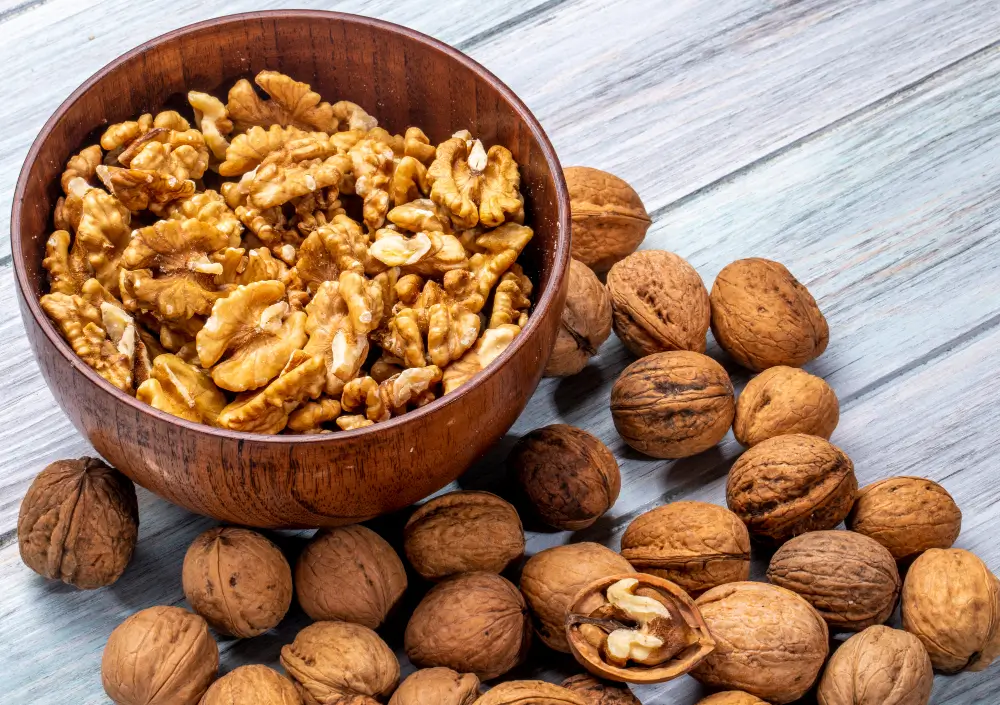
If you grew up in a Pakistani household, walnuts (akhrot) probably showed up in your winter diet long before anyone called them a “superfood.” Grandmothers have been pushing akhrot on grandchildren during exam season for generations, insisting it’s “good for the brain.” Turns out there’s real science behind that advice. Just not quite in the way most people assume.
This guide walks through what’s actually in a walnut, what the research says about heart and brain health, how many you should realistically eat, and who needs to stay away from them. No exaggerated claims, no miracle-cure language. Just what the evidence currently supports.
What Makes Walnuts Nutritionally Different From Other Nuts
Most nuts lean on monounsaturated fat — almonds, cashews, pistachios all fall into that camp. Walnuts are the outlier. Most of their fat is polyunsaturated, and a good chunk of that is alpha-linolenic acid, or ALA, a plant-based omega-3. California Walnuts notes that walnuts are the only tree nut that qualifies as an “excellent source” of ALA, providing roughly 2.5 grams per one-ounce serving.
Macronutrient Breakdown (Per 1 oz / 28g Serving)
| Nutrient | Approximate Amount |
| Calories | ~185 kcal |
| Total Fat | ~18.5 g |
| — Omega-3 (ALA) | ~2.5 g |
| Protein | ~4.3 g |
| Carbohydrates | ~3.9 g |
| Fiber | ~1.9 g |
| Copper | Good source |
| Manganese | Good source |
| Magnesium | Good source |
| Vitamin B6 | Good source |
Values are approximate and can vary slightly by brand and growing region. Figures are drawn from standard nutrition databases used by health organizations.
Where Walnuts Rank Among Other Nuts
| Nut | Omega-3 (ALA) per oz | Dominant Fat Type | Notable Strength |
| Walnuts | ~2.5 g | Polyunsaturated | Highest plant omega-3 among nuts |
| Almonds | Negligible | Monounsaturated | Vitamin E, calcium |
| Cashews | Negligible | Monounsaturated | Zinc, iron |
| Pistachios | Negligible | Monounsaturated | Lutein, potassium |
| Peanuts (technically a legume) | Negligible | Monounsaturated | Protein, folate |
Heart Health: What the Research Actually Shows
This is where walnuts have their strongest backing, by far. Multiple prospective studies and randomized trials — including data connected to the PREDIMED trial, one of the largest Mediterranean-diet clinical trials on record — link regular walnut and mixed-nut consumption with better cardiovascular risk markers.
A few consistent findings across research:
- LDL cholesterol reduction. Several clinical trials show modest but consistent drops in LDL (“bad”) cholesterol when walnuts replace less healthy snack fats.
- Improved vascular function. Some studies report better blood vessel reactivity and reduced markers of oxidative stress after regular walnut intake.
- Lower triglycerides. A more recent meta-analysis referenced by omega-3 researchers found associations between walnut consumption and reduced triglycerides and apolipoprotein B, a protein tied to cardiovascular risk.
Physicians generally recommend swapping saturated fats — fried snacks, excess ghee-heavy dishes — for a small daily portion of walnuts, rather than just piling walnuts on top of an already calorie-dense diet. The benefit seems to come largely from what walnuts replace, not just what they add.
Worth being precise here: this is “may help” and “is associated with” territory, not “guaranteed to prevent.” Heart disease has a long list of contributing factors, and walnuts are one small piece of a much bigger dietary picture.
Brain Health and Cognitive Function
The “good for your brain” advice isn’t just folk wisdom, either. Walnuts sit near the top of antioxidant-rich foods — one widely cited ranking placed them second among more than 1,100 foods tested. Antioxidants and polyphenols in walnuts, particularly ellagitannins, have been studied for their potential to ease oxidative stress in brain tissue.
What Current Research Suggests
- Regular nut consumption, including walnuts, has been associated with slower age-related cognitive decline in some observational studies.
- Animal studies suggest walnut polyphenols may help reduce inflammation linked to neurodegenerative changes, though human trial data is still thinner.
- Some research groups, including teams at UC Davis, are actively studying how walnut compounds interact with gut bacteria, which in turn may influence brain health through the gut-brain axis.
None of this means walnuts prevent Alzheimer’s disease or guarantee a sharper memory. The honest summary: walnuts are one piece of a brain-healthy dietary pattern, alongside physical activity, sleep, and overall diet quality.
Gut Health: An Emerging Area of Interest
Newer research is starting to look at how walnuts affect the gut microbiome, and early results are interesting. In one clinical trial cited by nutrition researchers, participants who ate about 43 grams of walnuts daily for eight weeks showed measurable increases in beneficial gut bacteria tied to butyric acid production — a compound linked to gut lining health. It’s a promising area, but still an early one. Larger, longer trials are needed before anyone draws firm conclusions.
How Many Walnuts Should You Eat Per Day?
There’s no single magic number here, but general dietary guidance points to a fairly consistent range.
Practical Serving Guide
- Standard serving: 1 ounce, roughly 28-30 grams, or about 14 walnut halves
- General dietary guidance: Around 4-5 ounces of nuts, seeds, and soy foods combined per week is a reasonable target on a 2,000-calorie diet, per U.S. dietary guidelines referenced by nutrition researchers
- Daily habit: A small daily handful is easier to sustain than one large weekly binge, and it spreads out the calorie load
Simple Ways to Add Walnuts to a Pakistani Diet
- Crush and sprinkle over daliya (porridge) or oatmeal at breakfast
- Add to plain dahi (yogurt) with a drizzle of honey
- Mix into daal for texture, or fold into a fruit chaat
- Use in place of some ghee-fried nuts in mithai recipes for a lighter version
- Blend into a smoothie with banana and milk
Who Should Be Careful With Walnuts
Walnuts are safe for most people. But there are exceptions worth taking seriously.
Walnut Allergy
Tree nuts, walnuts included, are among the eight most common food allergens tracked by major allergy organizations. Reactions range from mild — itching, hives — to severe, including anaphylaxis, which is a medical emergency. Anyone with a diagnosed tree nut allergy should avoid walnuts and walnut-derived products entirely, and it’s worth double-checking ingredient labels on packaged foods, sauces, and baked goods, since walnuts show up in unexpected places.
Other Considerations
- High calorie density: A handful adds up fast — overeating walnuts alongside an already calorie-heavy diet can contribute to weight gain.
- Phytic acid content: Walnuts contain phytate, which can slightly reduce absorption of minerals like iron and zinc from the same meal. This matters most for people relying heavily on plant-based iron sources.
- Blood-thinning medication: Because of their omega-3 content, people on blood thinners should mention regular high nut intake to their doctor — mostly just as routine medication housekeeping.
If you have a chronic health condition, are pregnant, or are managing cholesterol or blood sugar with medication, it’s worth running any real dietary change — including a new daily walnut habit — by your doctor or a PMDC-registered physician first.
Walnuts vs. Other Popular Snacking Nuts
| Factor | Walnuts | Almonds | Pistachios |
| Best known for | Omega-3 ALA, antioxidants | Vitamin E, calcium | Protein, lower calories per serving |
| Heart health evidence | Strong, multiple trials | Strong | Moderate |
| Brain health research | Growing, promising | Limited | Limited |
| Common allergen risk | Yes | Yes | Yes |
| Calories per oz | ~185 | ~164 | ~159 |
Frequently Asked Questions
Are walnuts good for weight loss?
Walnuts can fit into a weight-loss plan because their fat, fiber, and protein combination promotes fullness. However, they’re calorie-dense, so portion control matters. Replacing less healthy snacks with a small handful of walnuts is more effective than simply adding them on top of your current diet.
Can I eat walnuts every day?
Yes, for most healthy adults, a small daily portion — around one ounce — is considered safe and is the amount used in most research showing benefits. Long-term studies haven’t found daily walnut consumption to be harmful at typical serving sizes.
Do walnuts really help with memory?
Walnuts contain antioxidants and polyphenols associated with reduced oxidative stress in the brain, and some studies link regular nut consumption with slower cognitive decline. They’re not a proven memory cure, but they may support brain health as part of a balanced diet.
Is it safe to eat walnuts during pregnancy?
Walnuts are generally considered safe during pregnancy and provide useful omega-3s, unless there’s a known nut allergy. As with any dietary change during pregnancy, it’s best to confirm with your obstetrician, especially if you have other health conditions.
What’s the difference between walnuts and black walnuts?
Common walnuts (English or Persian walnuts, Juglans regia) are milder and more widely sold. Black walnuts (Juglans nigra) have a stronger, earthier flavor and slightly different nutrient profile, but both share similar core health benefits.
Can eating too many walnuts cause any side effects?
Overeating walnuts can cause digestive discomfort like bloating due to their fat and fiber content, and excess intake adds unnecessary calories. Sticking to roughly one ounce a day avoids these issues for most people.
Do walnuts raise cholesterol because they’re high in fat?
No — most of the fat in walnuts is unsaturated, and clinical research consistently shows walnuts are associated with lower LDL cholesterol, not higher, when they replace saturated fats in the diet.
Medical Disclaimer: This article is for general informational purposes only and does not constitute medical advice. It is not a substitute for professional medical consultation, diagnosis, or treatment. Always consult a qualified physician or PMDC-registered doctor before making significant changes to your diet, especially if you have an existing medical condition, food allergy, or are pregnant or breastfeeding.
References Consulted
- California Walnuts (walnuts.org) — nutrition and ALA research summaries
- UC Davis Health, “4 Health Benefits of Walnuts and How Much You Should Eat”
- OmegaQuant, “Is There Omega-3 in Walnuts?”
- Nutrition Advance, “9 Health Benefits of Walnuts (and Full Nutrition Facts)”
- PREDIMED trial data as referenced in Journal of the American Heart Association coverage

Riley Maloney is a Registered Dietitian Nutritionist (RDN) and Licensed Dietitian Nutritionist (LDN) with over 6 years of clinical experience helping individuals heal their relationship with food, recover from eating disorders, and improve their health without restrictive dieting. Practicing virtually from Chicago and contributing nutrition expertise to Erothots, Riley has supported over 800 clients on their journeys toward food freedom and body acceptance.