

Introduction
Chicken wings are one of the world’s favorite treats – beloved food at sporting events, barbecues and restaurant menus across the world. Many may dismiss chicken wings as indulgences – yet nutritional facts show otherwise.
Chicken wings provide many healthful nutrients ranging from proteins and fats, B vitamins, selenium and sequestering agents – and EroThots guide provides clear data, honest comparisons and practical recommendations so you can enjoy wings with greater assurance while making more intelligent decisions when cooking or ordering them.
Nutritional Information on Chicken Wings: Full Breakdown (Per 100g)
The table below details nutritional data regarding chicken wings — plain roasted as opposed to battered or deep-fried — per 100g of cooked meat according to USDA data:
| Nutrient | Plain / Roasted (per 100g) | Fried / Battered (per 100g) | % Daily Value (Plain) |
| Calories | 203 kcal | 290–340 kcal | ~10% |
| Protein | 18.3g | 17g | 37% |
| Total Fat | 13.2g | 18–22g | 17% |
| Saturated Fat | 3.7g | 5–7g | 19% |
| Cholesterol | 75mg | 80mg | 25% |
| Sodium | 82mg | 480–900mg* | 4% |
| Iron | 0.9mg | 0.8mg | 5% |
| Zinc | 2.1mg | 1.8mg | 19% |
| Selenium | 20mcg | 17mcg | 36% |
| Vitamin B12 | 0.7mcg | 0.5mcg | 29% |
| Niacin (B3) | 6.9mg | 5.8mg | 43% |
Sauced wings contain up to 900mg per 100g; plain roasted wings contain far lower sodium levels and provide greater nutritional benefits.
Macronutrient Profile: Protein, Fat, and Calories
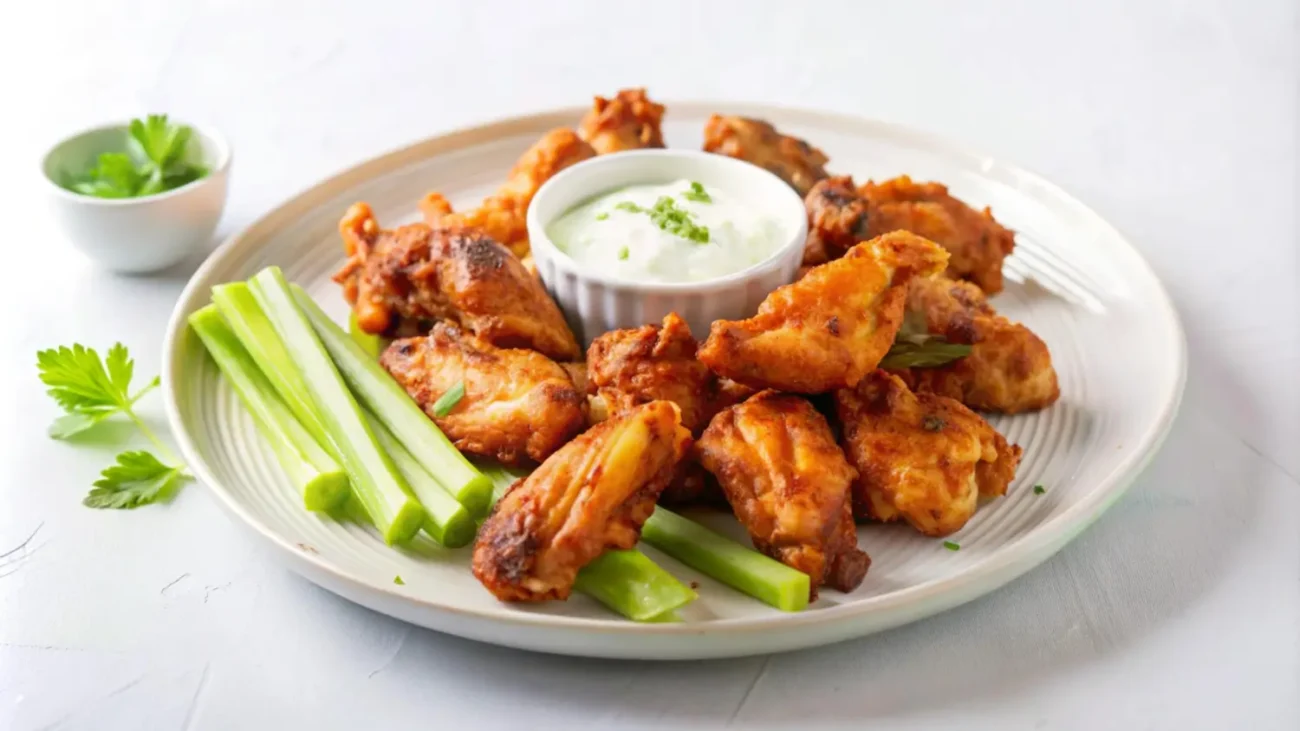
Protein
Plain roasted chicken wings produce about 18.3g fat-free protein in every 100g of meat; four to six wings (about 150–200g edible) delivers 27–37g complete protein — less than thighs or breast per gram due to their greater bone-to-meat and skin ratio, but nevertheless a significant part of daily amino-acids requirements.
Fat
Wings contain more fat than other cuts, around 13.2g per 100g if roasted — the result basically of their skin. Even though chicken flesh is lower in calories, if you’re watching your overall fat intake, removing the skin before eating can help provide a leaner option; about 30–40% of the fat in chicken actually comes from the skin.
Calories
Features of plain roasted wings hover around 203 calories per 100g, but once you factor in battering, frying and/or saucing that number can easily jump to between about 290–340 kcal/100g or more. The easiest way to treat wings in a moderate-calorie fashion is with simple preparation.
Vitamins and Minerals in Chicken Wings
Here’s the nutritional info for chicken wings, along with a solid micronutrient profile:
• Niacin (B3): ~43% of daily needs per 100g, important for cellular energy and DNA repair.
• Vitamin B12: Provides ∼29% of daily needs, important for red blood cell production and nerve health.
• Selenium: Provides ~36% of the daily requirements — aids thyroid function and immune defense.
List a few more of the common vitamins/minerals with their corresponding health benefits:
• Zinc: ~19% DV for your immune system, for healing wounds and regulating hormones.
• Phosphorus: Supplies about 13% of daily requirements, promoting bone strength and energy metabolism.
• Iron: About 5 percent of daily requirements — lower than thighs, but a decent contributing source in an occasional diet.
Chicken Wings vs Other Chicken Cuts
Here’s how the nutrition facts on chicken wings stack up against other popular cuts, based on cooked meat and per 100g:
| Cut | Protein / 100g | Calories | Fat | Best For |
| Chicken Wing (plain) | 18.3g | 203 kcal | 13.2g | Snacking, appetisers |
| Chicken Thigh (skinless) | 24.8g | 177 kcal | 8.2g | Flavour, grilling, stews |
| Chicken Breast (skinless) | 31g | 165 kcal | 3.6g | Low-fat, high-protein diets |
| Chicken Drumstick | 22g | 172 kcal | 8.0g | Budget meals, slow cooking |
Due to their skin, wings have the most calories and fat of all common cuts. Moderated and simply prepared, though, their beneficial selenium and B vitamin contributions make them more nutritious than most folks think.
How Cooking Methods Change the Nutritional Information on Chicken Wings
The single most important factor that determines how nutritious chicken wings are is the preparation method:
• Baking or roasting — Retains the greatest natural nutrients. Fat melts away while cooking, no extra oil needed.
• Grilling — The heat is high so the skin crisps nicely without imbuing the meat with a lot of fat. One of the healthiest preparation methods.
• Air frying—Creates a crispy texture while using far less oil than deep frying and cutting fat and calorie content by as much as 70 percent.
• Deep frying — Significantly raises calories and fat content. Battered versions soak up the most oil, so best reserved as an occasional indulgence.
• Sauces and glazes — Add 50–150 calories or more per serving, with a huge sodium hit. Removing heavier sauces in the first place helps nutritionally when used sparingly.
Chicken Wings for Different Dietary Goals
When made thoughtfully, chicken wings can accommodate many styles of eating:
- Weight management: Make sure to order your wings plain and baked or grilled — they are high in protein, helping you feel full. Portion awareness and avoiding heavy sauces are 2 key considerations.
- Muscle building: Including wings provides a whole protein with all the essential amino acids. Serve with higher-protein sides to enhance total intake per meal.
- Keto/low-carb: Naturally zero-carb and higher fat, plain wings are a keto staple. Stay away from sugary glazes and batterbased coatings.
- Rare treat: Fried, sauced wings taste best in moderation, counterbalanced by lighter food and vegetable sideszd throughout the day.
Frequently Asked Questions
How many calories in chicken wing?
One plain roasted wing (35–45g of edible meat) has 70–90 calories. This becomes 100–130 calories once you factor in frying and sauces. The calorie count for a six-piece serving varies widely by preparation — from 420 to more than 800 calories.
Are chicken wings healthy protein?
Yes, although less per gram than breast or thigh. Six plain wings offer 25–35g of complete protein, meeting a large % of most adults’ daily needs.
Are chicken wings healthy?
Plain baked or grilled wings are healthful, with protein, selenium, B vitamins and zinc. The health profile changes with deep frying and calorie-dense sauces. In moderation and simply prepared, they sit comfortably within a balanced diet.
What is the healthiest way to prepare chicken wings?
It’s best baked, grilled or air fried. Air frying is especially efficient: It mimics the texture of fried wings, using a small fraction of the oil and reducing fat content by as much as 70 percent compared with deep-frying.
Do chicken wings have more fat than other cuts?
Yes — the skin-to-meat ratio is greater than with other cuts. Eliminating the skin before consumption decreases fat content by around 30–40% and makes wings adjust far more in accordance with other chicken cuts nutritionally.
Conclusion
What the nutrition information on chicken wings shows is a much more balanced story than the party-food image would lead you to believe. Plain, simply cooked wings provide full protein, selenium, niacin and B12 — nutrients that help energy levels, immunity and muscle condition. The main variable is always preparation: The numbers stay clean with baking, grilling or air frying; deep frying and heavy sauces swing the calorie and sodium profile wildly.
Understanding chicken wings nutrition facts helps you become empowered. Opt for simple cooking techniques, temper your portions, and wings can claim a well-earned spot on a truly balanced diet.

Riley Maloney is a Registered Dietitian Nutritionist (RDN) and Licensed Dietitian Nutritionist (LDN) with over 6 years of clinical experience helping individuals heal their relationship with food, recover from eating disorders, and improve their health without restrictive dieting. Practicing virtually from Chicago and contributing nutrition expertise to Erothots, Riley has supported over 800 clients on their journeys toward food freedom and body acceptance.